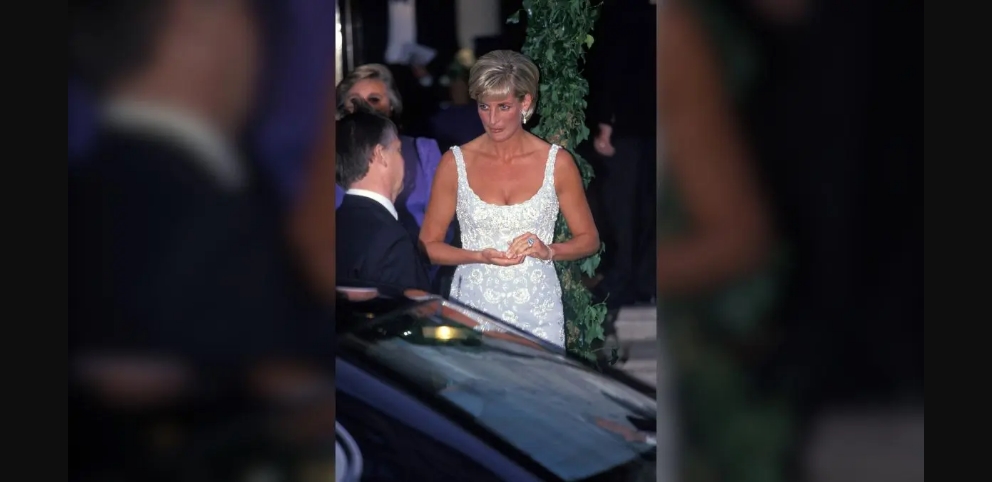
A piece of jewelry, purchased in the final hours before a tragic event, has become a lasting emblem of a love story that was never fully realized. The diamond ring acquired for Princess Diana by her companion, Dodi Fayed, in August 1997, continues to fuel speculation and symbolize a future that vanished on a Parisian street.
The item, known by its French name “Dis-Moi Oui,” was obtained from a Parisian jeweler mere months after Diana’s divorce was finalized. Her relationship with Fayed, the son of a prominent businessman, had developed rapidly that summer. Their lives, along with that of their driver, ended abruptly in a car accident on the last day of that August, leaving the ring’s intended purpose a permanent mystery.
While no formal proposal is confirmed to have taken place, the ring’s existence is well-documented. Crafted by Italian designer Alberto Repossi, the piece featured a distinctive design with a central emerald-cut diamond surrounded by smaller stones in a star pattern. Though the exact item Diana was meant to receive never appeared in a confirmed photograph, its likeness was featured in the jeweler’s advertising of the era.
Reports indicate the ring carried a price tag of approximately $15,200 at the time. It was later recovered from Fayed’s residence. When adjusted for modern values, its monetary worth would be significantly higher, but its historical association renders it invaluable. This stands in contrast to Diana’s famous first engagement ring, a sapphire chosen for her 1981 betrothal, now valued in the hundreds of thousands and currently worn by the Princess of Wales.
The narrative of this second ring entered broader public consciousness through its dramatized portrayal in a popular historical series, which depicted a fictionalized proposal scene. The actor who played Fayed in the production later spoke of the responsibility involved in portraying a figure linked to such a profound cultural moment, hoping to add depth to public understanding of the tragedy.
In the aftermath, a spokesman for Fayed suggested the businessman had been deeply in love and had given strong hints of his intention to marry Diana. The jeweler, Repossi, stated that the intense media scrutiny following the crash led him to halt the ring’s production campaign and destroy its designs to curb the surrounding “hysteria.”
The “Dis-Moi Oui” ring endures not as a symbol of a celebrated union, but as a poignant artifact of a relationship frozen in time, its promise unfulfilled, forever linking a piece of jewelry to one of history’s most mourned romances.