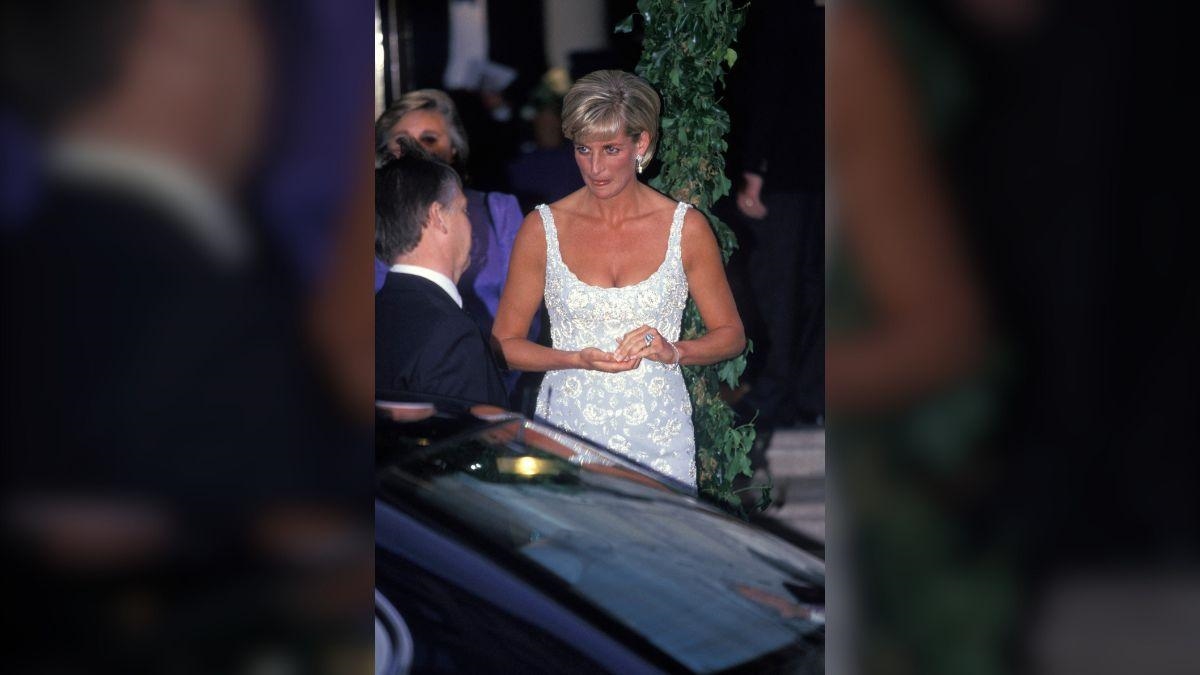
A piece of jewelry, purchased in the final hours before tragedy, continues to fuel speculation about one of the 20th century’s most famous romances. The story centers on an engagement ring, known by the French phrase “Dis-Moi Oui” or “Tell Me Yes,” acquired for Princess Diana by her companion Dodi Fayed in Paris during the summer of 1997.
The ring was designed by Italian jeweler Alberto Repossi. Its design featured a distinctive dome shape with a central emerald-cut diamond, surrounded by four trillion-cut stones arranged to form a star. While no verified photograph of the specific ring bought for Diana is known to exist, the model was featured in the jeweler’s advertising campaigns at the time.
Reports indicate the piece was procured for approximately $15,200 mere hours before the fatal car crash in Paris that claimed the lives of Diana, Fayed, and their driver on August 31, 1997. The ring was later recovered from Fayed’s apartment. When adjusted for modern inflation, its monetary value would be significantly higher, though its historical association renders it invaluable.
This ring stands in stark contrast to Diana’s first, and far more famous, engagement ring: the 12-carat sapphire chosen for her 1981 engagement to the then-Prince Charles. That ring, now worn by the Princess of Wales, carries an estimated value exceeding $130,000.
The narrative of the “Dis-Moi Oui” ring entered mainstream consciousness decades later through its dramatized portrayal in the Netflix series The Crown. The series depicted a fictional proposal scene, which served to highlight the enduring public fascination with the unanswered questions surrounding Diana and Fayed’s relationship at the time of their deaths.
In the aftermath of the tragedy, the ring’s designer took decisive action. Repossi stated he halted the jewelry line’s production and campaign, and destroyed the related designs and models in his workshop. He cited intense media pressure and attempts to obtain private information, wishing to end what he described as “hysteria.”
A spokesman for Fayed later reflected on the ring’s significance, suggesting that while its exact meaning might never be known, Fayed had given strong indications of his serious intentions toward the Princess. He characterized Fayed as “a man in love.”
Ultimately, the “Dis-Moi Oui” ring remains a poignant symbol—a tangible artifact of a relationship and a future that was devastatingly interrupted. It persists not for its gems or its cost, but for the haunting story of what might have been.