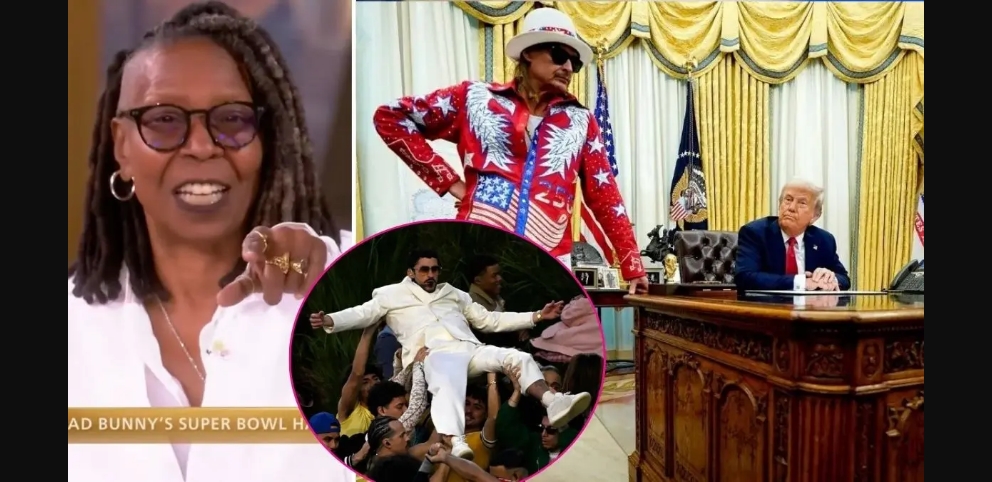
The cultural divide over this year’s Super Bowl halftime performance spilled into the public sphere this week, as commentary from a former president sparked both criticism and mockery from several television personalities.
The performance by global music star Bad Bunny—a mix of Spanish-language hits and elaborate staging—drew polarized reactions. In a social media post, one prominent political figure labeled the show “absolutely terrible,” an “affront to the Greatness of America,” and criticized its suitability for a young audience. The post questioned the performance’s representation of “Success, Creativity or Excellence.”
The critique did not go unanswered. On a popular daytime talk show, co-hosts reacted with visible amusement. One host questioned the authenticity of the statement’s authorship, suggesting the wording seemed unusually polished. Another highlighted the apparent contradiction in the critic’s viewing habits.
The host pointed out that the critic had publicly endorsed an alternative conservative-oriented halftime special featuring Kid Rock, yet reports and footage from the critic’s own Super Bowl watch party indicated the official NFL broadcast—and Bad Bunny’s performance—remained on the screens. “It’s clear you watched it,” the host remarked, before quipping, “So, what was happening with Kid Rock? Wasn’t that your thing?… They didn’t get that many viewers? OK.”
The host defended the artistic merit of the official halftime show, stating, “I think you don’t recognize excellence and creativity when you see it,” and praised its inventiveness. They concluded by noting the freedom to choose what to watch, suggesting a savvy viewer might “go back and forth just to stay on top of stuff.”
The alternative concert itself faced scrutiny. Reviews of Kid Rock’s performance were largely negative, with accusations of lip-syncing. Furthermore, claims about the event’s massive online viewership were publicly challenged by a conservative commentator, who alleged the numbers were inflated through paid promotion—a claim the event’s producers have disputed.
The incident underscores how major cultural events, like the Super Bowl, frequently become flashpoints in the ongoing debate over entertainment, politics, and national identity.